Helping design and engineering professionals discover, evaluate and specify technologies and processes that shorten the design cycle and enable success.


Alert!
Digital Engineering ceased publication on July 1, 2026. This website remains available as an archive of engineering content.
For inquiries or information, please email [email protected].
Sponsored

May 2026 Special Focus: Artificial Intelligence in Design and Simulation
In this Special Focus Issue, learn about the latest developments in the integration of artificial intelligence into engineering workflows.

Design & Simulation Software Guide 2025
In this Special Issue, Digital Engineering presents its second annual guide to design and simulation software vendors.

 Dear DE Reader:
COMSOL does not do skimpy updates. The latest release of its COMSOL Multiphysics portfolio, version 5.4, offers a lot of new stuff and multiple enhancements throughout its range of integrated toolsets for physics-based modeling and simulation of real-world systems. Here's a dime tour.
Whether COMSOL ever uttered the term “democratizing simulation,” they've been advocating it since before the term was hip. COMSOL Multiphysics 5.4 ups the ante. It introduces a compiler that the company has long promised existing users and should intrigue potential users.
This is big, but we're not going to dwell on it. Linked at the end of today's write-up is a terrific report from DE's Beth Stackpole that covers the COMSOL Compiler well. Suffice to say, modeling gurus can now make executable COMSOL Multiphysics simulation applications and freely distribute them without licensing issues.
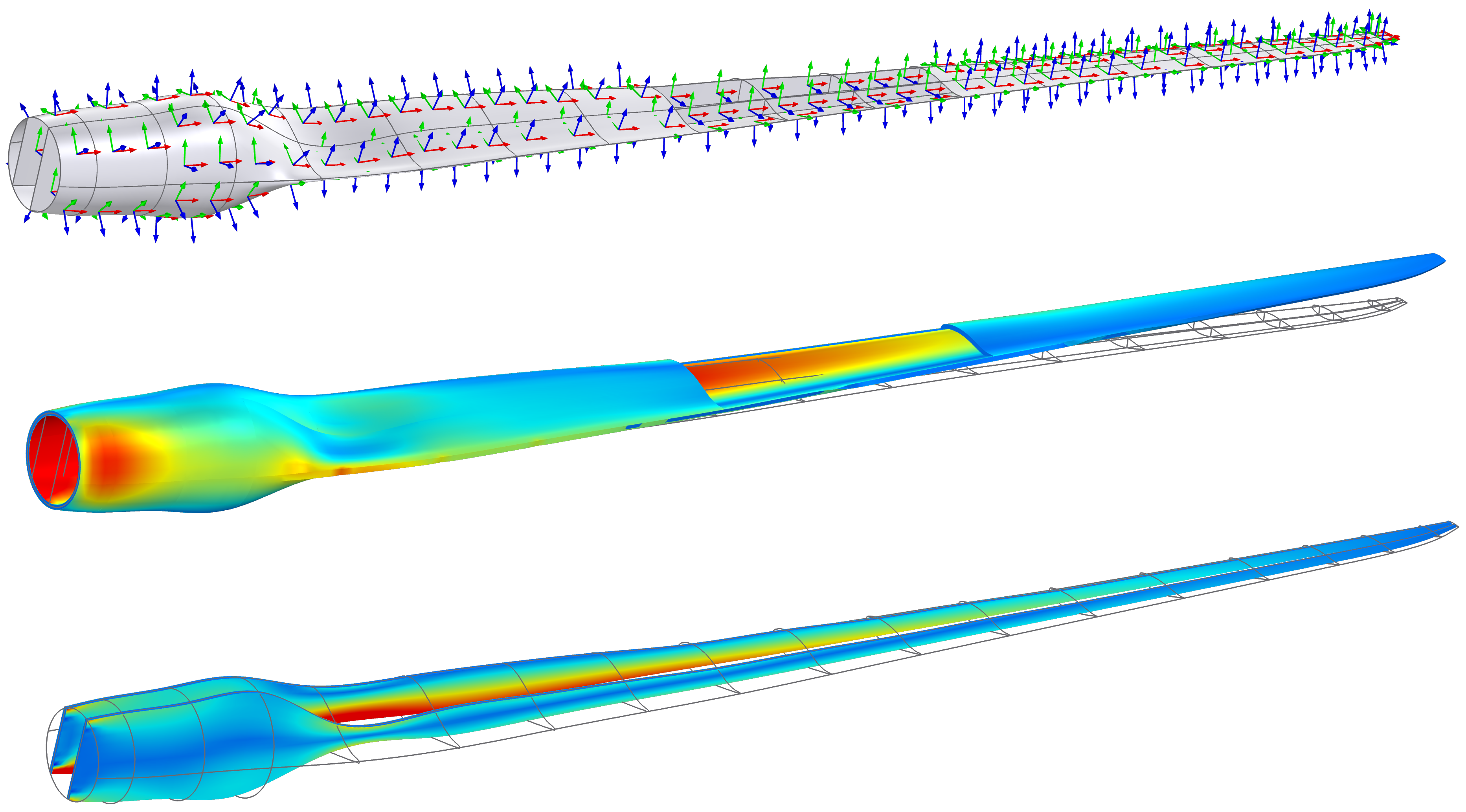
Also big if you ply your trade with layered materials is the new Composite Materials module. It provides dedicated tools that should make setting up simulations of composite laminated structures much easier.
This introduction also holds the potential for creating unique analyses such as studying lightning effects. Remember that COMSOL makes coupled analyses happen. You can now do simulations that combine the Composite Module's structural mechanics strengths with new layered shell functionality in the Heat Transfer module and the AC/DC electromagnetics module.
In addition to layered shells, the AC/DC module has a new parts library with ready-to-use coils and magnetic cores. The Heat Transfer module gets a light diffusion equation and functionality for radiation with diffuse-specular reflections and semi-transparent surfaces.
Elsewhere in the COMSOL Multiphysics 5.4 suite, the Computational Fluid Dynamics module sees upgrades for large eddy simulations and updated multiphase flow modeling tools. Fluid tools now offer capabilities for fluid-structure interaction for multiphase flow and multibody dynamics. Structural simulations now provide shock response spectrum analyses and material activation for additive manufacturing. The Acoustics and Ray Optics modules also see a number of enhancements.
The sleeper rollout in the 5.4 release could likely be its new topology optimization tool. In the official announcement it got four words, a picture and a short caption. Users will likely gravitate to it quickly.
That's just a sample of what's happening with the COMSOL Multiphysics 5.4 release. You can learn more by hitting the link to today's Editor's Pick of the Week write-up and from the links at the end. There's an introductory webinar tomorrow too.
Thanks, Pal. – Lockwood
Anthony J. Lockwood
Editor at Large, DE


Anthony J. Lockwood is Digital Engineering's founding editor. He is now retired. Contact him via [email protected].
Follow DE






About Us · Contact Us · Editorial Team · Advertising · Privacy Policy · Subscriber Services · © 2026 Digital Engineering 24/7 · Peerless Media